
Dry Plane Air and Itchy Skin: Carry-On Habits for Families

The first time we took a long flight with our kids, I packed snacks, chargers, a change of clothes and the usual “just in case” bag. What I did not pack carefully enough was a simple skin kit. By the time we landed, their cheeks looked tight and pink, their hands felt papery, and someone was rubbing their face against the seatback. Cabin air is dry, we had washed our hands a dozen times, and the little moisturizer I did bring was buried in a checked bag.
I’m a dad of two kids with eczema-prone, sensitive skin, and I’ve learned that travel days ask a lot of skin. Recycled cabin air, new hotel soap, different shower water, pool days and long stretches in a dry car can leave sensitive skin feeling tight, itchy and uncomfortable. We still say yes to trips. We just pack a little differently now.
This is what works for our family, not medical advice. If your child’s skin is cracked, painful, or a trip has you worried, check in with your pediatrician before you go.
Why travel days are hard on sensitive skin
A few things tend to stack up at once:
Dry cabin air. Airplane cabins are typically very low in humidity. Skin loses moisture faster in that kind of air, especially on faces, hands and lips, which are exposed the whole flight.
Lots of washing. Airport bathrooms, tray tables, sticky snacks and “please wash your hands” all mean more soap than a normal day. Many public soaps are heavily fragranced, and that combination of frequent washing plus dry air can leave hands feeling tight.
A change of water and products. Hotel shower gel, unfamiliar shampoo, and water that is harder or softer than what you use at home can all leave sensitive skin feeling different than it does in its usual routine.
New beds and long days. Hotel sheets, scratchy blankets, later bedtimes and skipped baths add up, especially for kids who already get itchy at night.
None of this means families with sensitive skin should stay home. It just means a short packing list and a few habits can make the trip a lot more comfortable.
The carry-on skin kit we actually use
The most useful change we made was moving our skin kit into a personal item, not a checked bag. A late suitcase does not help you mid-flight.
We keep everything in a clear quart-size zip bag so it is easy to pull out at security and easy to find in the dark of an airplane seat. Our list is short:
- A fragrance-free cream or ointment in a 3.4 oz (100 ml) bottle or smaller. This is the one we reach for most. Faces, hands, necks and any dry patches get a layer before boarding and again mid-flight if skin starts to feel tight.
- A plain, fragrance-free lip balm. Kids lick their lips on planes, and the skin around the mouth gets rough fast. We pack one for each of us so nobody is sharing a tube after a snack.
- A soft cloth or two. Better than stiff airline napkins for a gentle wipe after meals or a sticky drink. We dampen one with a little water, never with scented wipes.
- A small, mild, fragrance-free cleanser, or a bar in a travel case, if you have room. This is for the hotel, so we are not stuck with the strong-smelling shower gel by the tub.
- Optional, and very travel-friendly: a solid lotion stick. Because it is not a liquid, it stays out of the quart bag and is easy to swipe on cheeks or hands in a seat or a car without making a mess.
If you are traveling with a cream your dermatologist or pediatrician recommended, keep that one in the kit and bring a backup in checked luggage if you can. A soft pillowcase in the suitcase also helps if hotel beds feel scratchy.
For a longer packing list we use around the holidays, we put together a holiday travel checklist for dry, itchy skin.
Habits that help in dry cabin air

The kit only works if you use it. This is the in-flight routine that made the biggest difference for us:
Moisturize before you board, not after you feel dry. We do a thorough layer on faces, hands, necks and lips at the gate, after the last bathroom stop. Skin holds onto that moisture better if you start ahead of the dry air.
Point the vent away from faces. A blast of cabin air right at a child’s cheeks will dry them out quickly. We aim vents at the floor or turn them down, and use a light sweater or a soft scarf (not wool against the skin) if someone is cold.
Sip water through the flight. We pack refillable bottles and ask for water regularly. Dehydration does not help dry skin, and a drink also gives kids a reason to pause and reset.
Skip the hot hand-washing marathon when a rinse will do. After a snack, a soft damp cloth is often enough. When we do use airport soap, we rinse well, pat dry and put cream back on right away, before we walk back to the gate.
Reapply mid-flight on a long haul. Halfway through, we do hands, cheeks and lips again. It takes two minutes and is a useful stretch break.
Be careful with the blankets and the window. Some airline blankets feel rough on sensitive skin. We bring a soft cotton layer to put underneath. And a child’s face against a cold window for a two-hour nap can leave one cheek looking angry, so we slip a soft cloth or sleeve in between.
Hotel sheets, new water and a simple shower plan
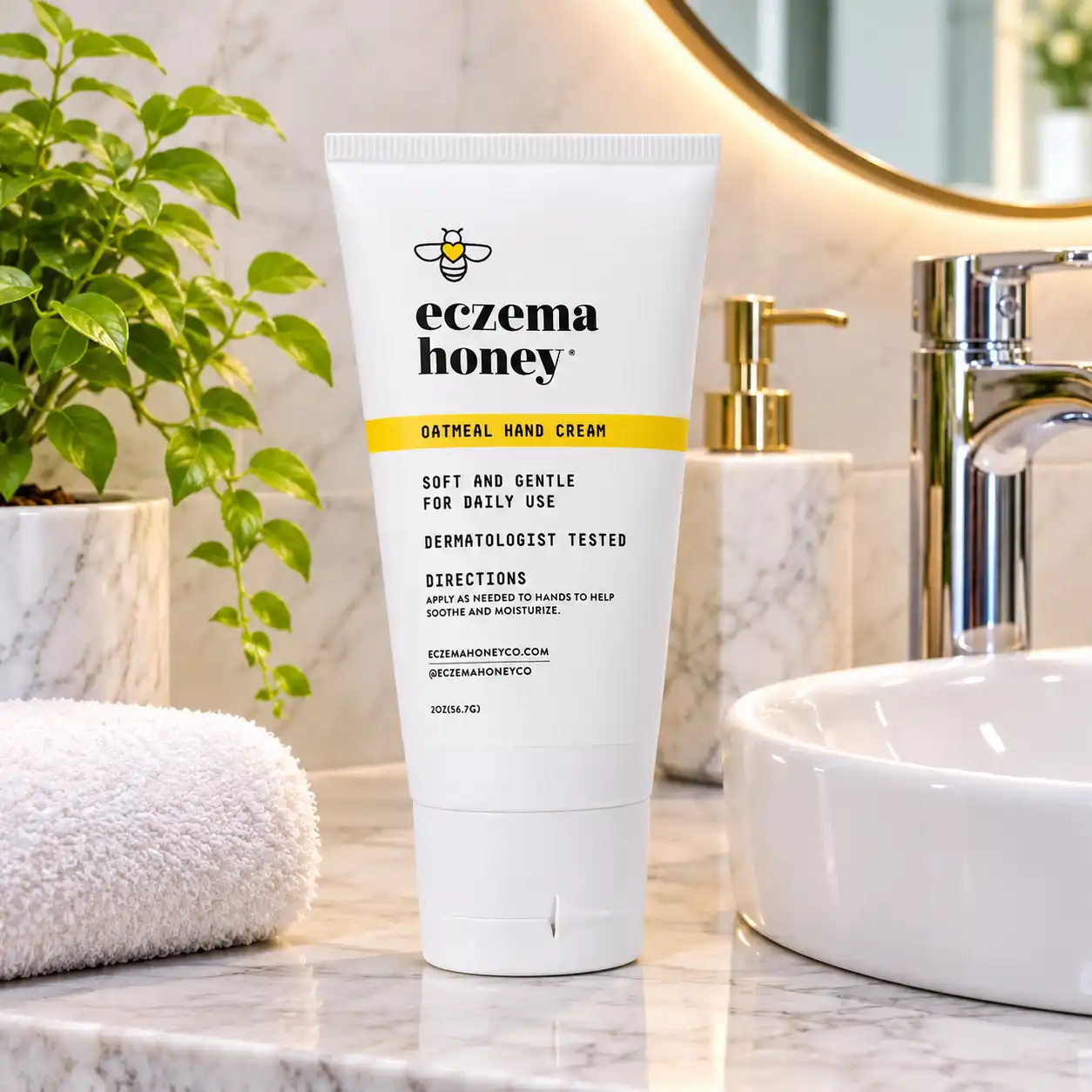
This is the part we used to ignore, and it showed up the next morning.
Use your own cleanser if you can. If the hotel soap smells strongly or leaves skin squeaky, that “squeaky” feeling is often tightness for sensitive skin. A small bottle of the mild cleanser you use at home is worth the space.
Keep showers lukewarm and short. After a travel day, a long hot shower feels great and can leave skin drier later. We aim for lukewarm water, a short rinse, and moisturizer within a few minutes, while skin is still slightly damp.
Pat dry, then seal in moisture. This is the same habit we use at home, just in a different bathroom. A generous layer of cream on the body, plus lip balm, before pajamas.
Watch the sheets and the thermostat. If the bedding feels rough, a soft cotton pillowcase or a familiar T-shirt under the sheet can help. We also keep the room a little cooler than “tropical,” with the heater or air conditioner not blowing directly at the bed. A quick check that no one is sleeping right under the vent is worth doing.
Keep cream by the bed. Itch often shows up at bedtime after a long, dry day. We leave the tube on the nightstand, not in a zipped suitcase, and we trim nails before a trip so any sleepy scratching is gentler on skin.
Sun, pool and park days
Arrival days often mean a pool or a long afternoon outside. A few habits we stick to:
- Use a sunscreen made for sensitive skin, and put it on over moisturizer so it is not sitting on dry, tight skin. Reapply after swimming.
- Rinse off after the pool or ocean. Chlorine and salt can leave skin itchy. A short lukewarm rinse and moisturizer afterward go a long way.
- Pack a dry, soft cover-up or cotton shirt so kids are not sitting in a wet swimsuit on the walk back or in the car.
- Don’t forget lips and the backs of hands. They burn and dry out too, and they are easy to miss.
Road trips and the dry-car problem
Not every trip starts at the airport. Long drives have their own version of cabin air: heater or air-conditioning vents, hours of sitting, and a lot of hand washing at rest stops.
We keep the same zip bag in the center console or a seat-back pocket. Heater vents get pointed at feet, not faces. After a rest-stop wash, cream goes on before we buckle back in. Snacks that drip (citrus, tomato sauce, sticky fruit) get a soft-cloth wipe and a little balm around the mouth, the same way we handle messy meals at home.
If a drive and a flight land on the same day, we do a full moisturize during the handoff, not just “when we get there.”
The small things we stopped overthinking
We used to try to rebuild our whole home routine on the road, and we usually failed. What actually stuck was smaller:
- The kit lives in the bag you carry, every time.
- Cream goes on before boarding, mid-flight, after showers and at bedtime.
- We use our own mild cleanser when we can, and we skip very hot water.
- We do not introduce a brand-new, heavily fragranced “vacation” lotion on the trip itself.
Every child’s skin is different, so notice what seems to bother your kids on the road and bring those notes to your pediatrician if something worries you. Then go enjoy the trip. The point of a two-minute kit is so you can forget about skin and remember the part that matters: you went.
About the author: Minesh Patel is a dad of two kids with eczema-prone skin and the founder of Eczema Honey, a small family skincare company.